Automatic pH control for acid and alkali exhaust scrubbers
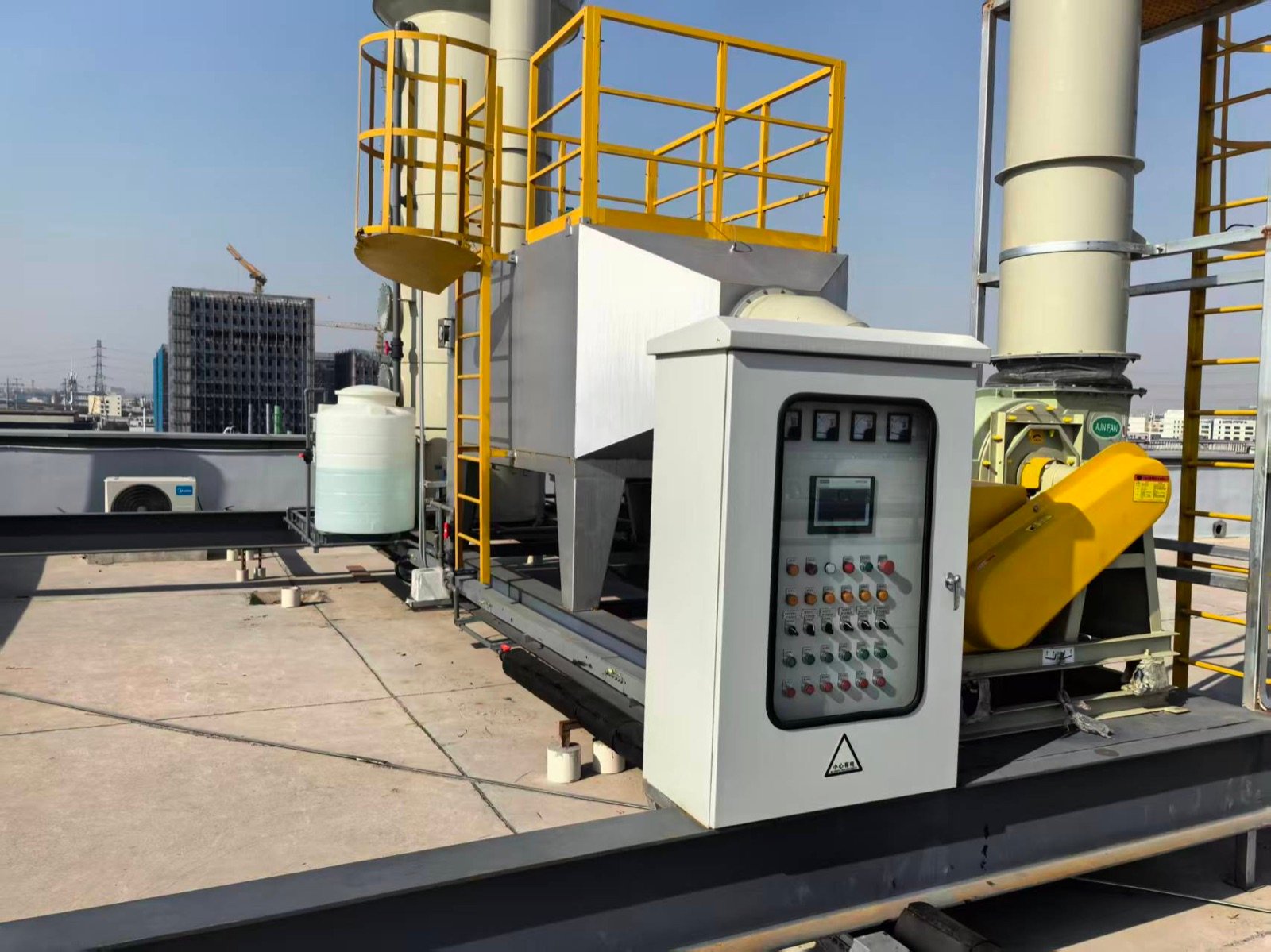
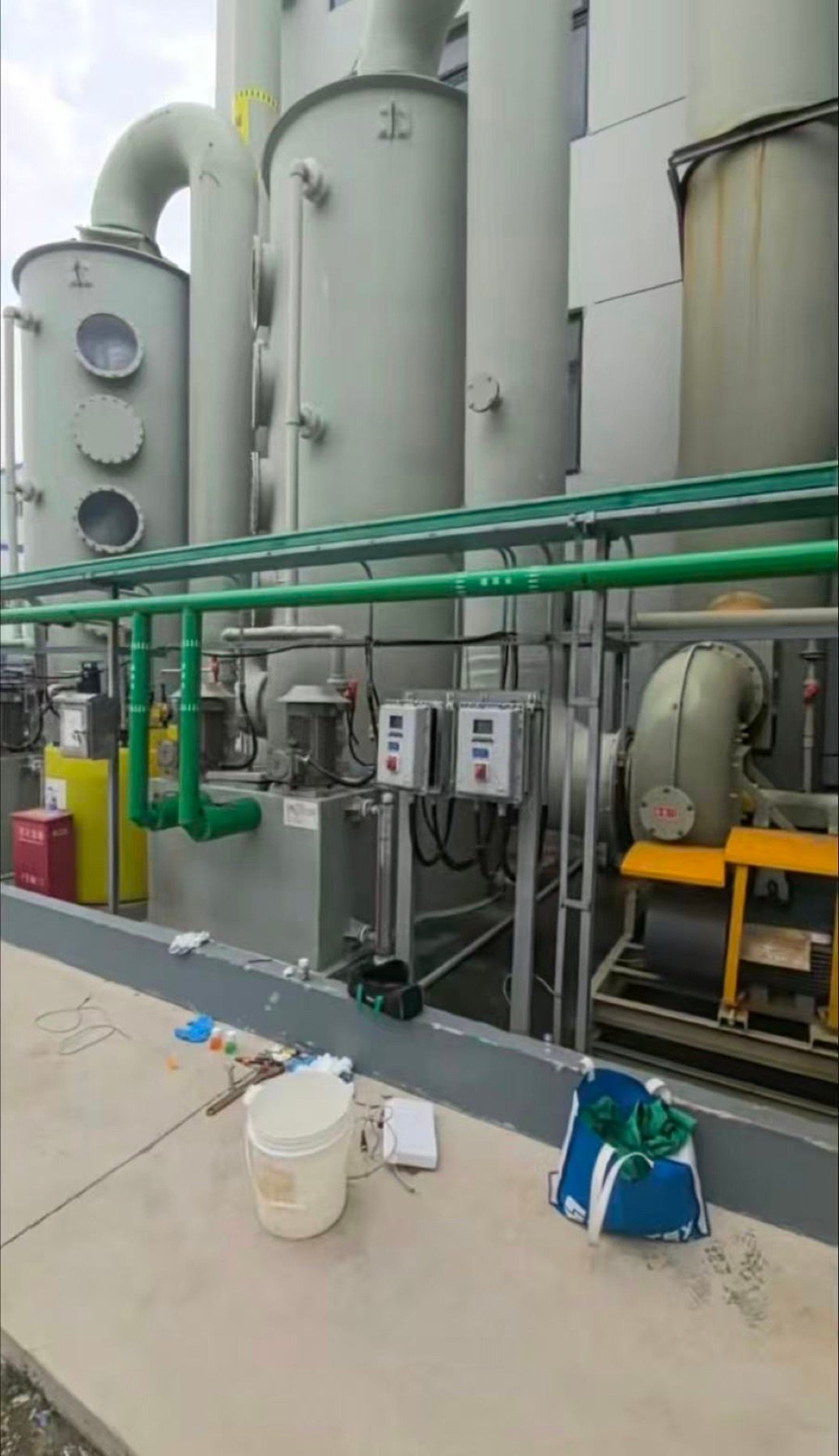
A chemical pharmaceutical operation in Lianyungang, Jiangsu required stable, traceable pH control for two FRP exhaust scrubbers treating hydrochloric-acid, acetic-acid and intermittent alkaline exhaust streams. The customer identity is withheld for commercial privacy.
Project Background
The active-pharmaceutical-ingredient production process generated acidic exhaust containing hydrochloric and acetic acid. Sodium hydroxide and lime-water circulation were used for neutralization, while occasional alkaline exhaust required a changeover to acid dosing. The site also required operating-data traceability, stable unattended control and reduced routine maintenance.
Customer Challenges
Sensor Fouling
Deposits and process residues adhered to general-purpose electrodes, causing drift and unstable neutralization control.
Manual Night-Shift Dosing
Operators sampled and adjusted chemicals several times per day. Unattended night operation increased the risk of pH moving outside the control window.
Traceability and Environment
High humidity and trace solvent vapour increased equipment demands, while environmental and GMP reviews required accessible operating records.
Tenber Project Configuration
Controller and DCS Integration
Controller: Tenber PHS-3301 online pH controller, configured for the project with RS485 communication, data recording and separate acid- and alkali-dosing relay logic.
The final recording, communication and enclosure specification must be confirmed for each order.
Application-Selected Electrode and Cleaning
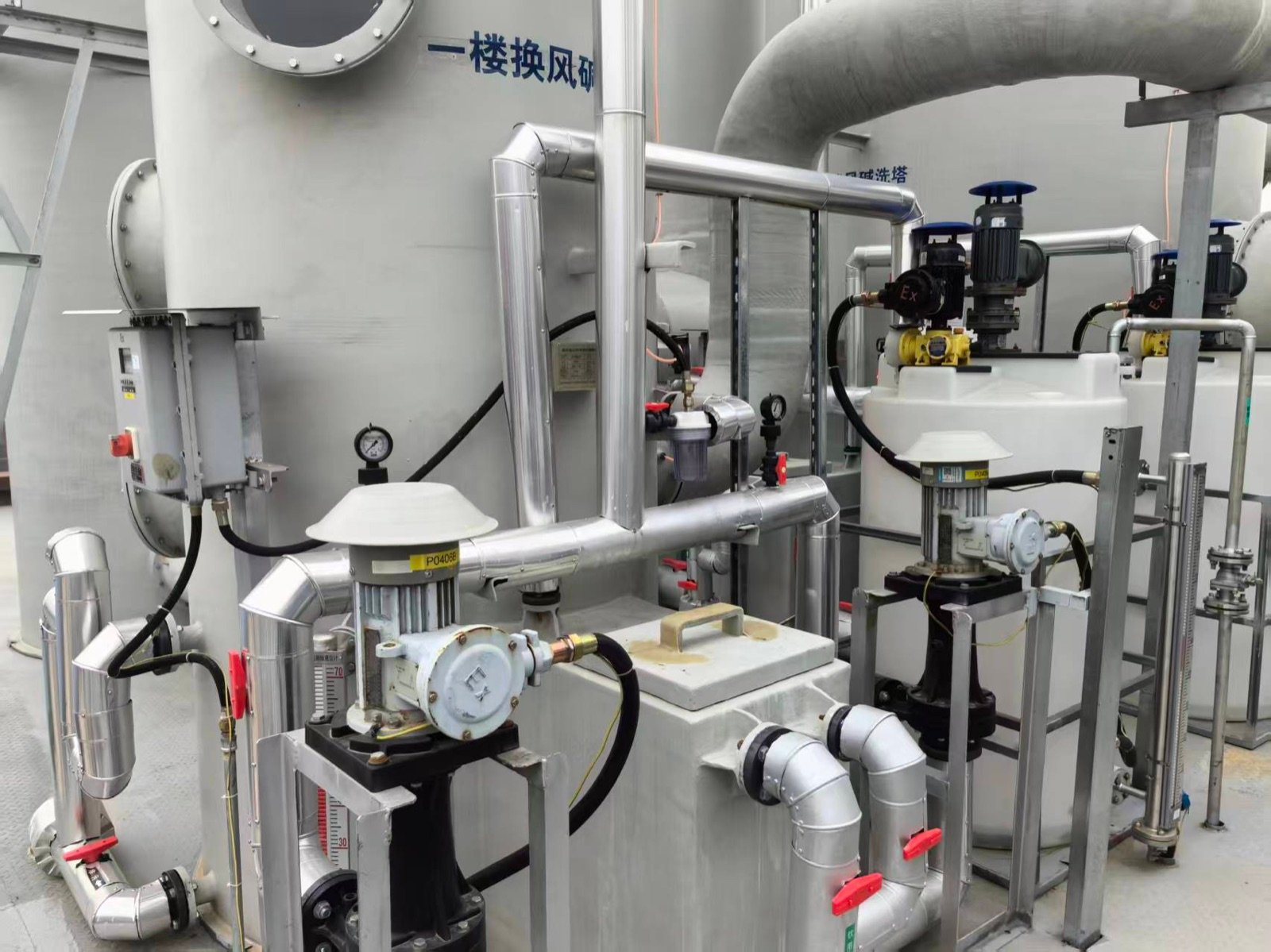
A corrosion-resistant pH electrode with cleaning connection and PTFE protective assembly was selected for the mixed scrubber liquid. A timed water-rinse arrangement helped reduce scaling and residue adhesion.
Flow-Through Installation and Control Logic
The sensor was installed in the scrubber circulation pipe away from sediment dead zones. The customer-defined operating windows were pH 8.0–9.0 for acidic exhaust treatment and pH 5.5–6.5 when alkaline exhaust required acid neutralization.
Explosion-Protection Requirement
The project specified an explosion-protected system arrangement for the installation area. Explosion-protection marking, enclosure, wiring, barriers and site classification must be confirmed as a complete project specification; this case does not state that every standard PHS-3301 configuration carries the same approval.
Customer-Reported Operating Results
The figures and compliance outcomes below were reported for this specific installation. Results vary with process chemistry, equipment selection, maintenance and operating conditions and are not universal performance guarantees.
The customer reported stable exhaust-treatment operation without environmental penalties during the reviewed period and successful support for project environmental and GMP review. Recorded pH data supported operating-history review and DCS visibility. These outcomes are installation-specific and depend on the complete treatment system and site management.
Why Cleaning and Installation Matter
Scrubber liquids containing lime, salts, process residues or organic contamination can coat a pH electrode and cause slow response or drift. Electrode material, protective assembly, cleaning method, installation position and calibration schedule should therefore be selected as one system.
Frequently Asked Questions
Can one system control both acid and alkali dosing?
Selected controller configurations can support separate relay logic, but the pumps, interlocks, changeover sequence and safety design must be confirmed for the site.
How can electrode fouling be reduced in a scrubber?
Use an application-matched electrode, avoid sediment dead zones and consider a compatible timed cleaning arrangement. Cleaning liquid and frequency must suit the process.
Can pH data be sent to a DCS?
RS485 or analogue-output integration is available on selected configurations. Protocol, addresses, isolation and recording requirements should be confirmed before ordering.
What information is required for explosion-protected installation?
Provide the hazardous-area classification, gas group, temperature class, required marking, wiring method, enclosure and local compliance requirements. Approval must cover the complete supplied configuration.
Request a scrubber pH-control configuration
Send the exhaust type, scrubber liquid, control range, fouling conditions, hazardous-area requirement, communication signal and dosing logic for technical review.